
Alex Morgan, marketing director for a regional restaurant chain, is finalizing a press release. It’s a big moment for the company; a new menu concept, months in the making. Alex and the team are excited to launch. They’re expecting a big buzz in the community. Leadership signs off. The release goes out to a strong media list.
And then, silence.
No journalist followed up with questions. No media outlet picked up the story.
It’s confusing, because from Alex’s point of view, the story is important.
But Alex’s experience highlights one of the most critical truths in PR:
What feels significant inside your business doesn’t automatically translate into something newsworthy outside of it.
As discussed in a previous blog, 49% of journalists seldom or never respond to pitches. Why? Because they have a different perspective.
The Shift: From Announcements to Stories
Most PR efforts start from the same place: “Here’s what we want to share.”
But the media starts somewhere else entirely: “Why should anyone care?”
This is why many PR efforts break down.
A new hire, a product update, or a company milestone all signal meaningful progress for your company. But externally, they only matter if they connect to something relevant to the audience.
Every journalist is quickly scanning press releases for the same signals:
-
Why now?
-
Why should my audience care?
-
What makes this story different?
Storytelling drives every successful PR campaign. However, if your story doesn’t answer those questions, it won’t grab a reporter’s attention.
Strong PR pitches supply both context and meaning.
Newsworthiness Isn't Given. It's Built.
Before you write a press release, start by shaping a story from the audience’s perspective. Build your story in layers.
Relevance is the First Layer
Connect your story to something a specific audience already cares about. That could be an industry trend, a shift in consumer behavior, or a topic covered in the news or online.
Timing is the Next Layer
A story without urgency feels optional. When you anchor it to something happening now, such as a market shift, a seasonal moment, or a new consumer trend, you justify why you should tell it today.
Then There's Impact
This is where many stories fall short. Go beyond describing what your company is doing. Translate your efforts into what changes for your customer, your industry, or your community. The more tangible that impact is, the stronger your story becomes.
And Finally, the Human Element
People don’t connect with features or announcements. They connect with relatable outcomes, experiences, and real-world implications.
When your story includes each of these dimensions, it becomes more than information. It becomes something worth sharing.
Why Relevance Matters the Most
One of the most telling data points in PR is that the majority of pitches are ignored because they aren’t relevant. And 67% of journalists prefer custom story angles tailored to their audience or beat.
Targeted, well-matched outreach consistently brings stronger results than wide, generic pitches. When your story corresponds with a journalist’s usual beat, it shifts from a cold pitch to a valuable contribution.
This is why certain brands seem to always get coverage. It’s not because they’re louder. It’s because they execute their PR efforts with precision and strategy.
Writing for Media vs. Writing for Marketing
Another subtle but important shift is how you draft the story. PR that performs well doesn’t sound like marketing. It reads like journalism.
That means you get to the point quickly. You answer key questions early. You avoid using exaggerated or self-promotional language. And you provide enough clarity and structure that a journalist can use it with minimal edits. That matters because about half of journalists utilize PR content with little editing.
When you write clear, relevant, and structured content, you do more than pitch your story. You tell it.
Expanding What "Counts" as PR
Many organizations limit PR to major moments: launches, rebrands, or executive hires. These moments matter, but they’re not your only opportunities.
Build an impactful PR strategy on a steady stream of smaller, well-shaped stories. These could be stories about your:
-
Growth milestones
-
Original insights or thought leadership
-
Strategic partnerships
-
Community initiatives
-
Operational innovation
This consistency offers a distinct advantage. By sharing regular stories, your brand stays visible and relevant over time.
Turning Moments into Moments
Every business has moments worth sharing, but not every moment creates traction. The difference is what you build around it.
When you align your PR, content, and messaging around a clear narrative, one press release can extend beyond a one-time announcement. It reinforces your positioning and develops credibility over time.
How to Turn an Idea Into a Story
Most pitches start with a basic update. But what gets coverage is the story behind the update. Push beyond what you’re doing and explain why it matters.
Here are a few ways to do that.
Look for a Meaningful Community Connection
A community link can add depth to your story. If your announcement has a charitable tie-in, a collaboration, or a cause your brand supports, that can quickly elevate your pitch.
This is especially powerful when it’s:
-
Ongoing, not one-time
-
Tied to a real need in the community
-
Connected to your brand’s values
For a hotel, that might mean a grand opening tied to a local workforce initiative. For a B2B company, it could be about industry standards for employee safety.
The key is authenticity. When the connection is real, the story has more depth and more relevance.
Highlight What's Truly Different
Every brand says they’re unique. Very few explain it in a way that matters to a reporter or their audience.
Ask yourself:
What do we offer that genuinely doesn’t exist elsewhere?
That could be:
-
A new service model
-
A different operational approach
-
A distinct customer experience
-
A product innovation
For example, a restaurant might introduce a new menu where 100% of ingredients are sourced from farms within a 100-mile radius. That’s not only menu update. It’s a different approach to sourcing, sustainability, and local economics.
If you can clearly articulate what’s different and why it matters, you’re on the right track.
Anchor It in a "First"
Being the first in a city, market, or category can be compelling, but only if it signals something meaningful.
For example:
-
First of its kind in a city or neighborhood
-
First to introduce a concept responding to a trend.
-
First to bring a proven model into a new market.
In B2B, being the first to bring a proven solution into an underserved market, or the first to apply a new technology in a practical way, can carry substantial weight, especially when it solves a known challenge.
The story should provide the context about what that “first” represents for customers, the market, or the community.
Bring Proof from Other Markets
Let proof strengthen your credibility. If you succeed elsewhere, use those examples to your advantage.
Instead of simply saying you’re expanding into a market or concept, show:
-
Performance in other locations or in other sectors
-
Customer response and demand
-
Awards, recognition, or rankings
-
Measurable outcomes
For a restaurant, that could be strong reviews or regional awards. For a B2B brand, it might be client results, adoption rates, or industry recognition.
Connect to a Larger Trend
One of the strongest ways to turn a pitch into a story is to connect it to something already happening.
Ask:
What broader shift does this tie into?
It could be:
- Changing consumer preferences
- Economic or industry pressures
- Technology adoption
- Cultural or lifestyle shifts
For example, tie your restaurant opening to consumer demand for healthier, faster dining. Or tell reporters that your software solution addresses automation challenges in the sector.
Connect Your Story to Something Bigger
Each approach takes a standalone update and connects it to something bigger.
That’s what turns:
-
An opening into a community story
-
A product in an industry shift
-
A milestone is a signal of momentum.
That’s what makes a pitch feel like a story, which is something a journalist can use and an audience will care about.
Read our blog, From Headlines to Hashtags: Building a Winning Public Relations Strategy, for more insights on telling a great PR story.
At Phase 3, our PR team has turned relatively straightforward moments into meaningful visibility, not because the moment itself was extraordinary, but because we intentionally built storytelling around it.
Case Study: Crafting a Story Around a Single Moment
A good example of this approach comes from our work with Carlyn Ray Designs. The core milestone was straightforward: the artist’s first museum exhibition at The Grace Museum in Abilene, Texas. On its own, that’s a meaningful achievement, but a limited PR story. Instead of treating it as a one-time announcement, our strategy expanded it into a broader narrative. As an established artist with strong work and regional recognition, the opportunity was to elevate Carlyn’s brand to an expanded audience and position her as a nationally recognized artist and thought leader.
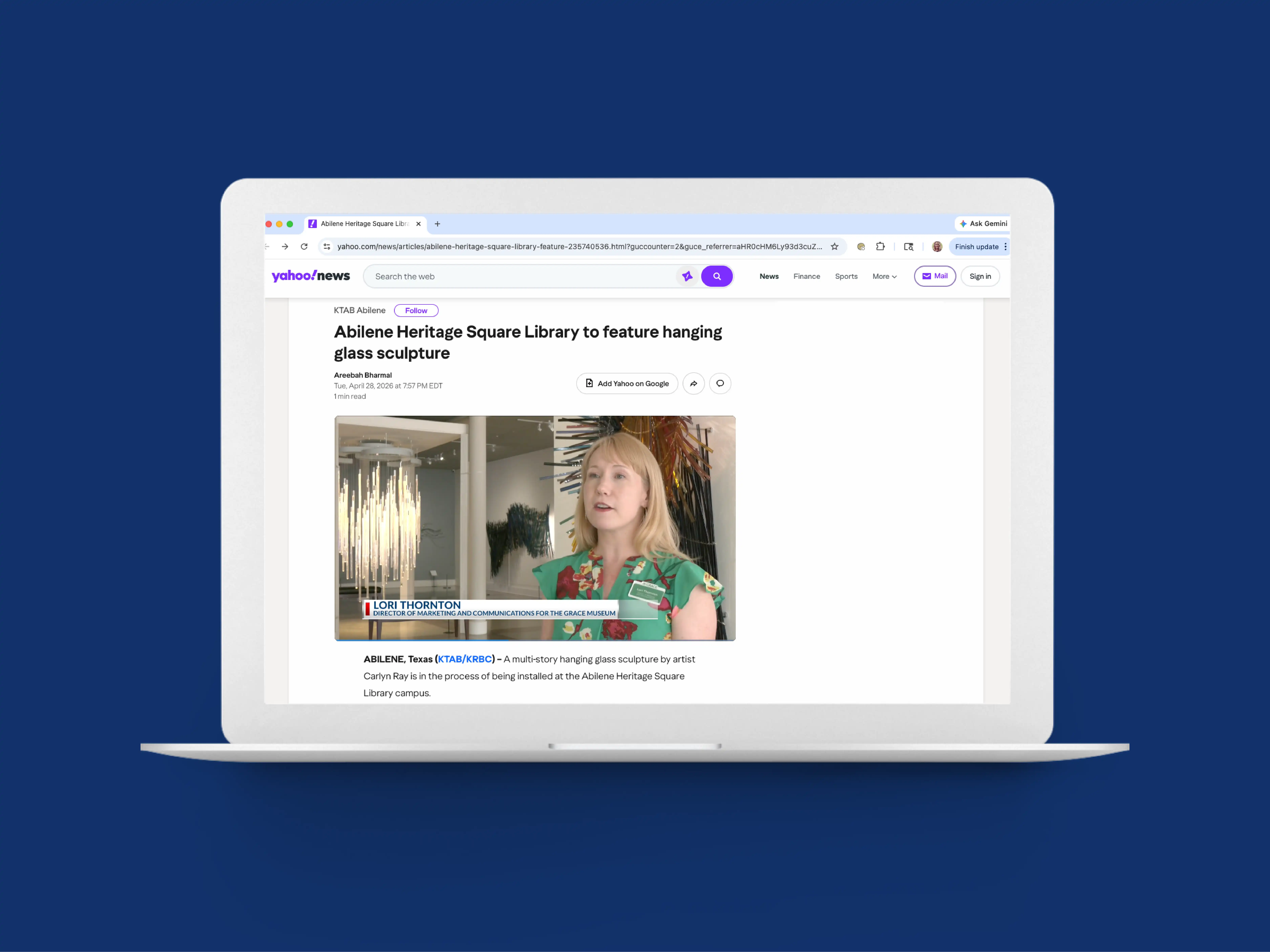
The exhibition became the anchor for a larger brand story centered on transformation, light, and artistic perspective. That included consistent storytelling about the work and creative process, a cohesive voice across platforms, and proactive media outreach tied to key milestones.
The results went well beyond the event itself:
-
15 media placements
-
Over 2 million media impressions with Abilene media outlets
-
Significant audience growth and engagement across social platforms
More importantly, it positioned the artist beyond a single exhibition, forming a foundation for continued growth and recognition.
Read our blog, Telling the Full Story: Numbers and Narrative in PR Reporting, to understand and evaluate both the numbers (quantitative metrics) and the narrative (qualitative metrics) of a PR campaign.
The Bigger Takeaway
PR works best when it’s treated as a strategic function, not a reactive one. The most effective PR strategies use storytelling to shape perception.
That requires clarity and alignment. And it requires an openness to step back and ask,
“Is this actually a story someone else would want to tell?”
When the answer is yes, your outreach is more effective, and coverage is more relevant. Even better, your results will be more meaningful and sustainable.
Related Reading
How to Build an Influencer Marketing Strategy That Drives Real ROI
From Surprise to Spectacle: How Pop-Ups Became the Ultimate Brand Power Move
The Long Game of PR: How Subtle Wins Build Brand Trust
Every Business Has News
The most effective PR strategy focuses on framing your news in a way that connects to something bigger than your business. When you do that well, PR becomes more consistent, more predictable, and more valuable.
Alex eventually went back and rewrote the original press release. They shifted the focus from the launch to something more relevant, highlighting the restaurant’s move to using only locally grown organic ingredients. This change matters for the community, local farmers, and customer expectations.
That version sparked a conversation with a local reporter covering environmental issues, leading to a series of articles focused on sustainability and health.
The difference was perspective.
Ready to Shape Stronger Stories?
If you’re looking to move beyond announcements and build a PR strategy grounded in relevance, timing, and impact, Phase 3 can help.
Let’s start with your story and make sure it’s one worth telling.