
Real estate developers understand the importance of signage. Yet they often order signs individually as needs arise. They produce a construction banner for groundbreaking events. Fence graphics go up when construction begins. Marketing teams design leasing signs as soon as the leasing center opens. Permanent building signs and wayfinding are addressed as opening approaches.
This piecemeal approach can create problems. Branding becomes inconsistent. Permit delays or installation conflicts disrupt schedules. Signs may need redesign, reprints, or relocation. Prospective residents, business partners, and other visitor can struggle to find their way around the site or encounter a property experience that doesn't match its marketing.
These problems can cost you time and money at critical project stages. They also reduce the intended return on your signage investment.
A coordinated real estate development signage program helps prevent these issues. It connects temporary and permanent signage to your development's brand, construction schedule, and operational needs.
This guide explains what signage you need at each stage of development, when to make decisions, and who should be involved.
Why Real Estate Development Signage Should Be Planned Early
Real estate projects need both temporary and permanent signage. Each serves a different purpose, but both should be part of the same plan.
Temporary Real Estate Development Signage
Temporary signs support construction, marketing, and leasing as the property takes shape.
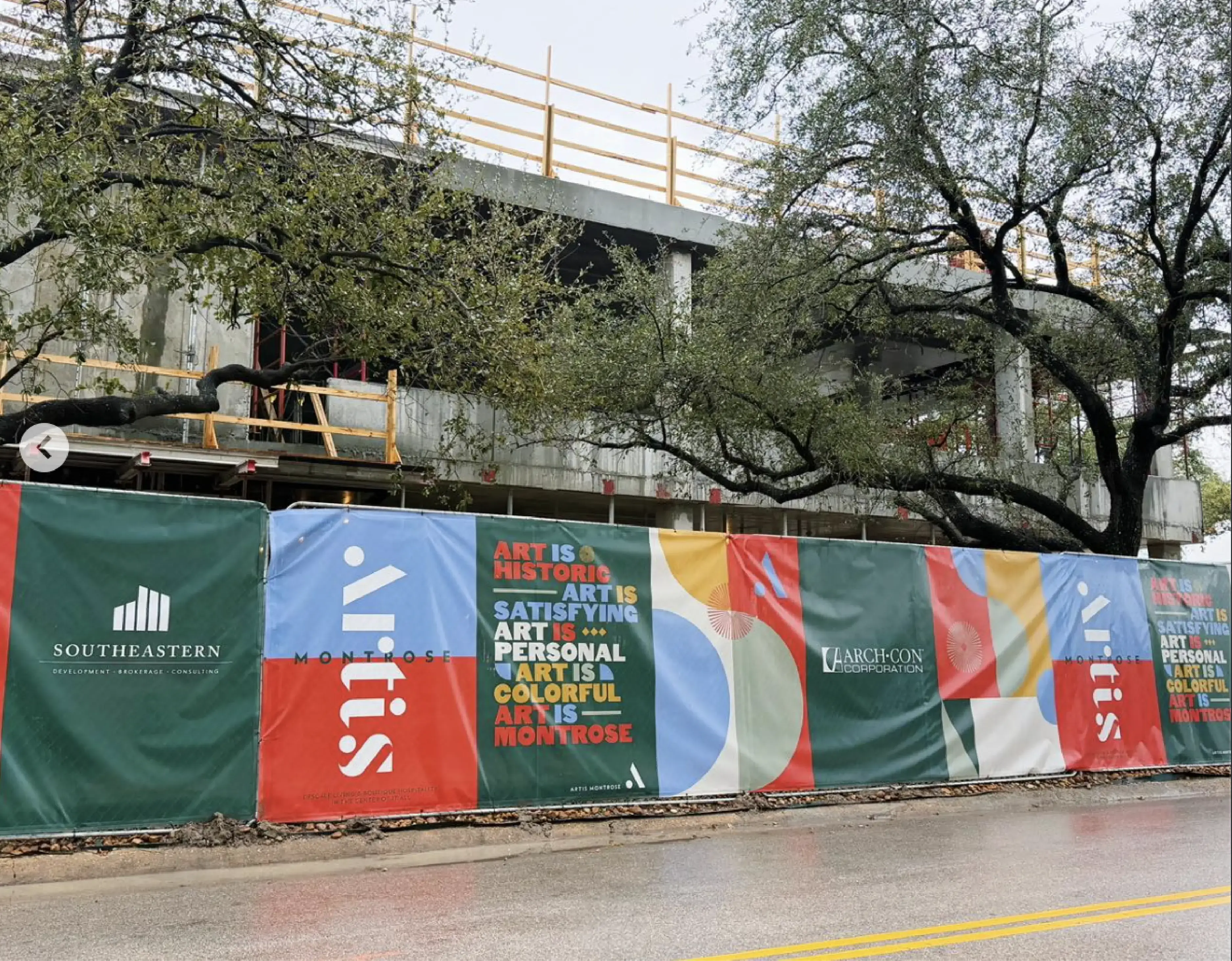
Construction fence and hoarding graphics introduce the development before opening day. Promotional banners build awareness and interest. Leasing banners and directional signs help prospects navigate areas open to visitors.
Construction sites also require safety signs to communicate hazards, restrictions, and other important information. These signs follow separate safety requirements. However, their placement must be coordinated with marketing graphics and site operations.
As buildings open and access routes change, temporary signs need to be updated, relocated, or removed.
Permanent Real Estate Development Signage
Permanent signs become part of the completed property's brand identity and everyday operations.
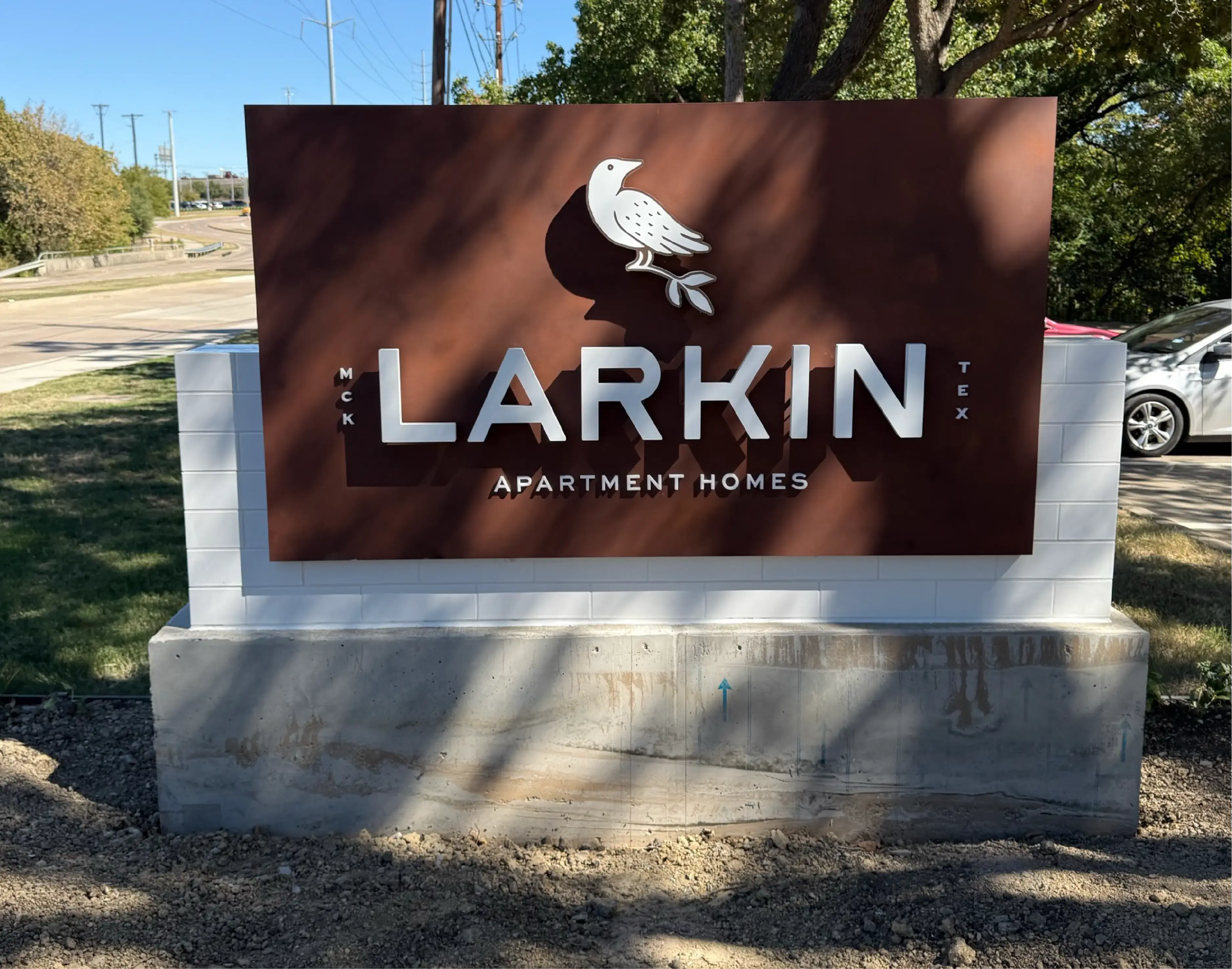
Monument signs identify entrances. Building signs, parking signs, and wayfinding help people move through the development. Interior signs support accessibility and guide people to their destinations.
These signs often require more extensive planning. Their design and placement depend on architectural drawings, structural supports, electrical access, landscaping, and applicable codes.
One Real Estate Development Signage Plan
Although temporary and permanent signs serve different purposes and follow different installation schedules, plan them as one coordinated program. Both should represent your brand and provide a consistent visitor experience.
Planning them together also helps avoid conflicts. For example, a temporary leasing sign could occupy the location intended for a permanent entrance sign. Without coordination, you may need to move or reproduce the temporary sign.
A master signage plan identifies each sign's purpose, location, approval requirements, and installation timeline. It also accounts for construction sequencing and local laws.
Early planning doesn’t mean you need to manufacture every sign immediately. Temporary graphics need frequent updates, and permanent signs often depend on final field measurements. The goal is to anticipate needs and decide early to avoid delays and extra costs.
Real Estate Site Signage Timeline at a Glance
Every development has a different schedule, but most projects move through several recognizable signage stages. Some signage stages can overlap, especially in phased real estate developments.
| Development Stage | Typical Signage |
When Planning |
Potential Approvers |
|
Brand launch |
Project identification, coming-soon signs, renderings, and fence graphics |
Once the name and brand direction are established
|
Developer, marketing, design team and applicable local authorities |
|
Active construction
|
Fence graphics, |
Before site enclosure and public marketing begin |
Developer, contractor, site-safety team and applicable authorities |
|
Pre-leasing |
Leasing banners, |
Before leasing or |
Marketing, leasing, property management, and contractor |
|
Opening and |
Monument signs, |
Coordinated with building completion and occupancy milestones |
Developer, architect, property management, and applicable |
|
|
|
|
|
Specific requirements and approval processes vary by municipality, property type, and project scope. Confirm permitting, fabrication, and installation lead times for each sign type.
Phase One: Brand Launch and Pre-Construction Signage
Your development's first signs appear before there’s anything to show community members or prospects.
At this stage, signage helps your target audience understand what’s coming and why they should be interested.
Project identification signs and development renderings communicate the property's name, vision, and future amenities. Branded perimeter graphics and coming-soon banners establish a visual identity. Signs should also direct prospects to a website or landing page via a QR code, URL, or contact information.
These early signs should match the branding used in digital marketing, sales materials, and future leasing campaigns. This is especially important when a project is under construction for several years. Your real estate development signage can be the most visible expression of your brand during that period.
Required public notices must also be displayed where applicable. These serve different purposes and have different requirements than promotional signage.
Phase Two: Signage During Active Construction
An active construction site must communicate with several audiences.
Contractors and delivery drivers need to find the correct entrances. Pedestrians need directions around closed sidewalks. Passersby want to know what you’re building.
Construction site signage could include branded fence graphics, barricade graphics, project information boards, entrance and exit signs, and temporary directional signs.
These signs must accommodate changing site conditions. A fence graphic installed early may need repositioning as access points or work areas change.
Marketing Signage and Safety Signage Have Different Requirements
Marketing signs promote the development and communicate its brand. Safety signs identify hazards, restrictions, and required actions. Both appear on the same active construction site but serve different purposes.
Construction-safety signage must follow the site's safety plan and applicable regulations. OSHA's construction standards address accident-prevention signs, signals, and barricades. The general contractor and safety experts should identify the project's specific needs.
Marketing graphics can’t hide important warnings. They also shouldn't create safety hazards or disrupt site operations.
Phase Three: Pre-Leasing and Sales-Launch Signage
Pre-leasing introduces a new challenge. Prospective residents, buyers, and brokers may begin visiting while construction continues. Leasing employees and property management teams may also start working on site.
Signage must help these audiences reach destinations safely and understand which areas are accessible.
A multifamily property needs leasing-office identification, window graphics, promotional banners, model-unit signs, and visitor parking directions. Temporary pedestrian wayfinding can guide prospects around unfinished areas.
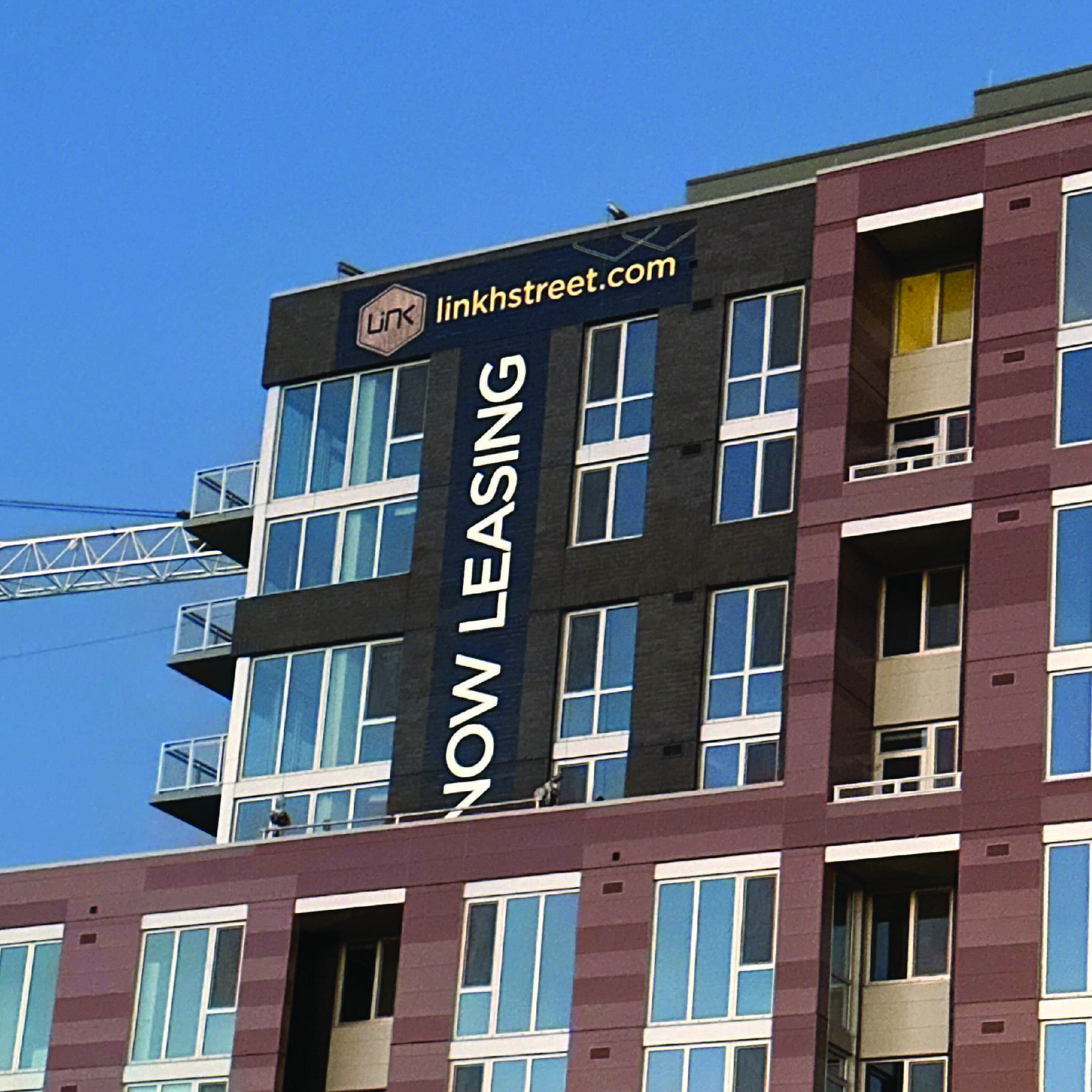
A well-planned pre-leasing signage program anticipates the visitor’s experience. It helps them find the right entrance, parking area, and leasing office with little confusion or safety issues.
As construction continues, parking areas could change. New entrances might open. More buildings will be accessible. Review temporary directions regularly to keep pace.
Phase Four: Opening and Permanent Property Signage
As your property approaches opening day, the emphasis shifts toward permanent signage.
For an apartment complex, this generally includes monument or entrance signs, building identification, parking directions, directories, amenity signs, and interior wayfinding.
Mixed-use developments often require a more complex system. Residents, retail customers, employees, and delivery drivers can enter from different locations. They may also need directions to different destinations.
A coordinated signage system makes navigation easier through consistent typography, brand colors, materials, icons, and terminology. It should also be consistent with other marketing and sales materials.
For example, a building called The East Residences on the property website shouldn’t appear as Building C on the site directory. Consistent naming helps visitors recognize destinations and find their way.
Permanent signage must also account for physical conditions. Sightlines, mounting surfaces, lighting, structural supports, and accessibility requirements will influence design and placement. Local building and fire codes can also have additional requirements.
Managing Signage During Phased Occupancy
Many developments open in stages. Residents may move into the first completed building while construction continues elsewhere.
During the transition, temporary and permanent signs operate side by side.
A permanent monument sign identifies the community while temporary directions guide residents around an unfinished roadway. A completed building may have permanent interior wayfinding installed even though its primary entrance remains inaccessible.
Your signage plan should account for these conditions. Establish a process for updating signs as you reach construction milestones. Property management and construction teams should review changes together. As needed, remove temporary signs and replace with permanent ones.
Who Approves Real Estate Site Signage and When?
Signage approvals involve several stakeholders, each with different responsibilities. Bringing the right people in at the right time helps prevent redesigns, permitting delays, and construction conflicts.
| Stakeholder | Responsibility |
When to Improve Them |
|
|
Sets objectives, budget, and priorities. Approves major signage decisions. |
During initial planning and throughout the project.
|
|
Brand and
|
Establishes brand standards and reviews graphics, messaging, and promotional content. |
During initial planning and throughout the project as |
|
Architect and |
Coordinates sign placement, materials, structural support, and electrical requirements with the property design. |
During architectural planning, |
|
General contractor |
Reviews site access, safety, installation logistics, and conflicts with construction. |
Before construction begins |
|
Leasing, sales, and
|
Verifies leasing information,
|
Before leasing begins, when
|
|
Landlord, association, or master developer |
Reviews signage against property |
Before signage concepts |
|
Local planning, zoning, and permitting authorities |
Reviews applicable sign regulations, permits, placement, and illumination. |
During early planning, with |
|
Building, fire, and accessibility reviewers |
Reviews applicable code requirements for ADA Standards, egress, and life-safety signage. |
During architectural planning and before the affected spaces open. |
Each sign should have a designated reviewer, an approval deadline, and an installation milestone.
For example, a permanent illuminated entrance sign will need architectural coordination and local permits well before opening. A temporary leasing banner has an easier approval process. Still, it needs approval and printing before the leasing campaign starts.
Keeping track of these decisions together helps stop delays in one part of the signage program from affecting others.
A Practical Signage Approval Workflow
A documented approval process helps developers manage signage decisions as the project evolves.
1. Create a signage inventory. Identify temporary and permanent signs by purpose, location, and development stage.
2. Assign responsibility. Designate an owner for each sign and identify the required reviewers.
3. Confirm site conditions and requirements. Verify locations, dimensions, sightlines, mounting surfaces, and access. Identify applicable permits, design standards, and technical requirements.
4. Develop coordinated designs. Establish consistent branding and standards across the sign package.
5. Complete stakeholder reviews. Obtain feedback from marketing, leasing, architecture, construction, and operations.
6. Approve production details. Confirm artwork, materials, measurements, and fabrication drawings.
7. Manage production and installation. Account for fabrication lead times, site readiness, and construction milestones when scheduling installation.
8. Inspect and update. Review installed signs and revise temporary signage as conditions change.
The workflow won’t always be linear. Changes in construction phasing, traffic circulation, or leasing plans will require additional reviews.
A shared signage inventory makes those revisions easier to manage. It gives stakeholders a current record of approved designs, production status, and outstanding decisions.
Common Causes of Signage Delays
Even with a signage plan, three common problems can disrupt a development schedule.
-
Incomplete or outdated site information. Sign locations may be based on drawings that are no longer accurate. Changes to entrances, landscaping, utilities, or mounting surfaces can lead to redesigns and delays.
-
Decisions made too late. An illuminated monument sign needs electrical connections, structural support, and local permits. Waiting until opening to think about these details can create conflicts with other construction work and increase costs.
-
Unclear approval responsibilities. When multiple stakeholders assume someone else has reviewed a design, they could overlook key requirements. This can lead to extra review cycles, reprints, or signs that aren't ready when needed.
A shared signage plan helps developers avoid these risks. Review it at major construction milestones. Confirm site conditions, approved designs, production schedules, and installation dates to stay on track.
Coordinate Real Estate Site Signage From Concept to Installation
Your development's signage needs will change throughout construction, leasing, and occupancy. A coordinated program keeps those changes connected to the property's brand and schedule.
Phase 3 brings brand strategy, environmental design, large-format printing, custom fabrication, and installation together under one roof.
Our teams help real estate developers plan and produce construction graphics, leasing materials, wayfinding, and permanent property signage as part of one program.
This integrated approach reduces handoffs between design and production. It also makes it easier to address technical requirements early and preserve brand consistency throughout development.
Planning signage for a residential, multifamily, or mixed-use development? Talk to Phase 3 about creating a coordinated real estate signage program from groundbreaking through opening and beyond.