
A retailer is preparing for its annual Mother’s Day sale in all 75 stores. Each location needs window graphics, cash wrap banners, display signage, promotional posters, and point-of-sale materials before the sale launches.
Store managers log into the company’s Web-to-Print portal, select the approved materials for their store size and layout, and place their orders.
Behind those few clicks, a much larger operation is underway. The system is monitoring decisions around:
-
Are stores ordering the correct campaign creative?
-
Which materials are already in inventory, and which need to be produced?
-
Can everything be kitted and delivered before the promotion begins?
-
What happens when a sign is damaged, or a location needs more materials halfway through the sale?
The Web-to-Print process does make ordering marketing and sales materials easier. But ordering is only one of many steps in getting a coordinated campaign into 75 stores on time. The storefront is only half the story.
What Web-to-Print Does Well
Web-to-Print technology emerged in the late 1990s along with the rapid growth of e-commerce. At the time, moving print procurement online was a significant innovation. Instead of relying on phone calls, paper forms, manual proofs, and lengthy approval chains, businesses could order printed materials through a browser-based system.
Modern Web-to-Print platforms can support much more than online ordering. Some systems offer configurable templates, approval workflows, brand controls, inventory visibility, print-on-demand, fulfillment, and reporting.
The technology has evolved. But many companies still approach Web-to-Print primarily as an online storefront used to give employees, franchisees, dealers, or locations an easier way to find and order approved materials. Once the portal is running and orders are flowing, the Web-to-Print problem may seem solved.
But an easier transaction doesn't automatically improve the print operation.
The greater opportunity lies in connecting the ordering experience to the entire print lifecycle. This involves determining available materials, protecting the brand, selecting appropriate production methods, managing inventory, fulfilling and distributing orders, replenishing materials, and leveraging data for informed decisions.
The technology may already support many of these capabilities. The value comes from making them work together.
The Print Operation Has Become More Complex
A restaurant franchise may support hundreds of owners. A healthcare organization may have dozens of facilities. A national retailer has stores with different layouts and promotional needs. A B2B company may need to supply field sales representatives, distributors, dealers, and corporate offices.
The materials vary, too. A sales representative needs a personalized business card. A retail location needs signage sized for its windows. A new product launch requires hundreds of kits delivered to different locations by the same date. When a brand or offer changes, materials across the organization may need to change with it.
At this scale, an efficient ordering process is essential. However, the order is only one stage in the lifecycle of branded materials.
The Real Work Happens Across the Entire Print Lifecycle
Let’s go back to our retailer preparing 75 stores for its Mother’s Day sale. From a store manager's perspective, the process begins when she logs into the portal. From the marketing team’s perspective, it started much earlier and won't end when she clicks “submit.”
Marketing must determine which assets are available, protect the brand, choose how to produce each, manage inventory, assemble orders, and get everything to the right locations on time.
Once the campaign launches, stores may need replacements or replenishment. When it ends, marketing needs to retire outdated creative and use the campaign results to inform the next campaign.
By following the campaign through each stage of the print lifecycle, you can see the full scope of activities behind a simple online order.
Start With the Right Materials
The Mother’s Day campaign starts with dozens of possible assets: window graphics, cash wrap banners, posters, point-of-sale pieces, and other materials for different store sizes.
Before a store manager orders anything, the marketing team decides which products the stores should have. They’re answering questions such as:
-
Which materials apply to every location?
-
Which depend on store size or configuration?
-
Which items can stores customize?
-
Which assets should marketing retire so stores can't order them?
As the number of locations, users, and marketing assets grows, those decisions become harder to manage manually. A centralized system gives employees access to relevant materials while giving corporate marketing greater control over what’s available.
Case in Point: Promptcare
As PromptCare grew to more than 40 U.S. locations, it needed a better way to manage marketing materials, branded merchandise, uniforms, and print-on-demand assets for different locations and user groups.
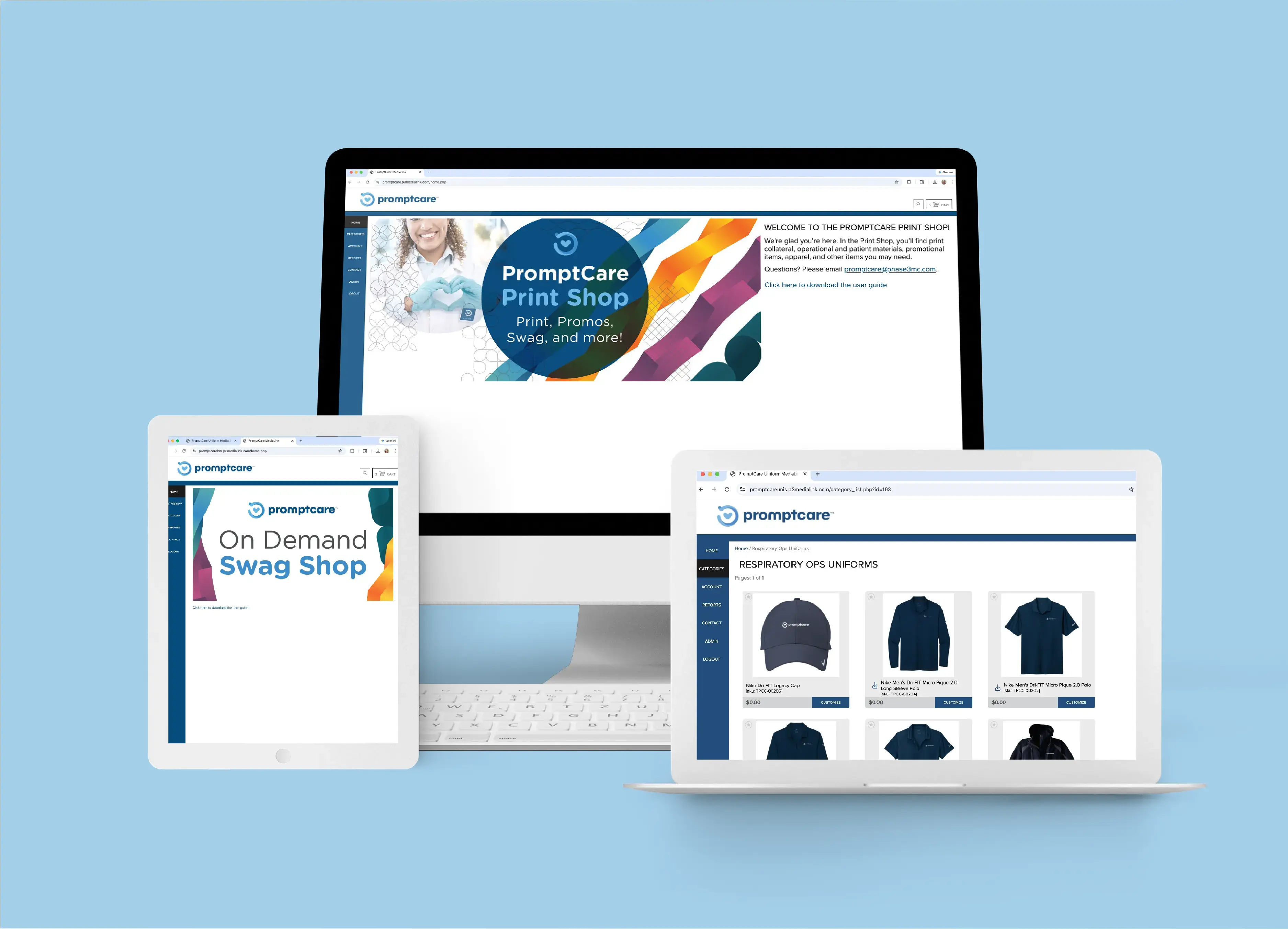
Phase 3 implemented three MediaLink storefronts, centralizing access to more than 150 SKUs for 200 individual users. Phase 3 also supports the program with small- and large-format printing, print-on-demand, warehousing, and distribution.
Protect the Brand
Making the right materials available is only part of the challenge. You also need to control how they're used.
Imagine that one of our 75 store managers wants to change the headline on the Mother’s Day poster. Another wants to resize the logo to fill an empty space. A third finds last year’s promotional graphic saved on a local drive and decides to reuse it.
A single altered sign may seem minor. But when those changes spread across 75 stores, multiple campaigns, and hundreds of assets, corporate marketing can quickly lose control of brand consistency.
Building brand governance into your online storefront adds guardrails without sacrificing flexibility. Approved templates lock logos, colors, and layouts. Yet, users can customize designated fields. Approval workflows will then route certain changes to corporate marketing before production. Centralized asset management also keeps outdated creative out of circulation.
Brand governance gives individual locations and teams enough flexibility to meet their needs without asking them to interpret brand standards every time they need a piece of collateral.
Case in Point: Psycho Bunny
Fashion retailer Psycho Bunny needed a faster, more controlled way to create, order, and distribute materials across its store locations. Phase 3 developed a MediaLink site where store-based users can access approved point-of-purchase pieces, window clings, marketing collateral, and other materials.
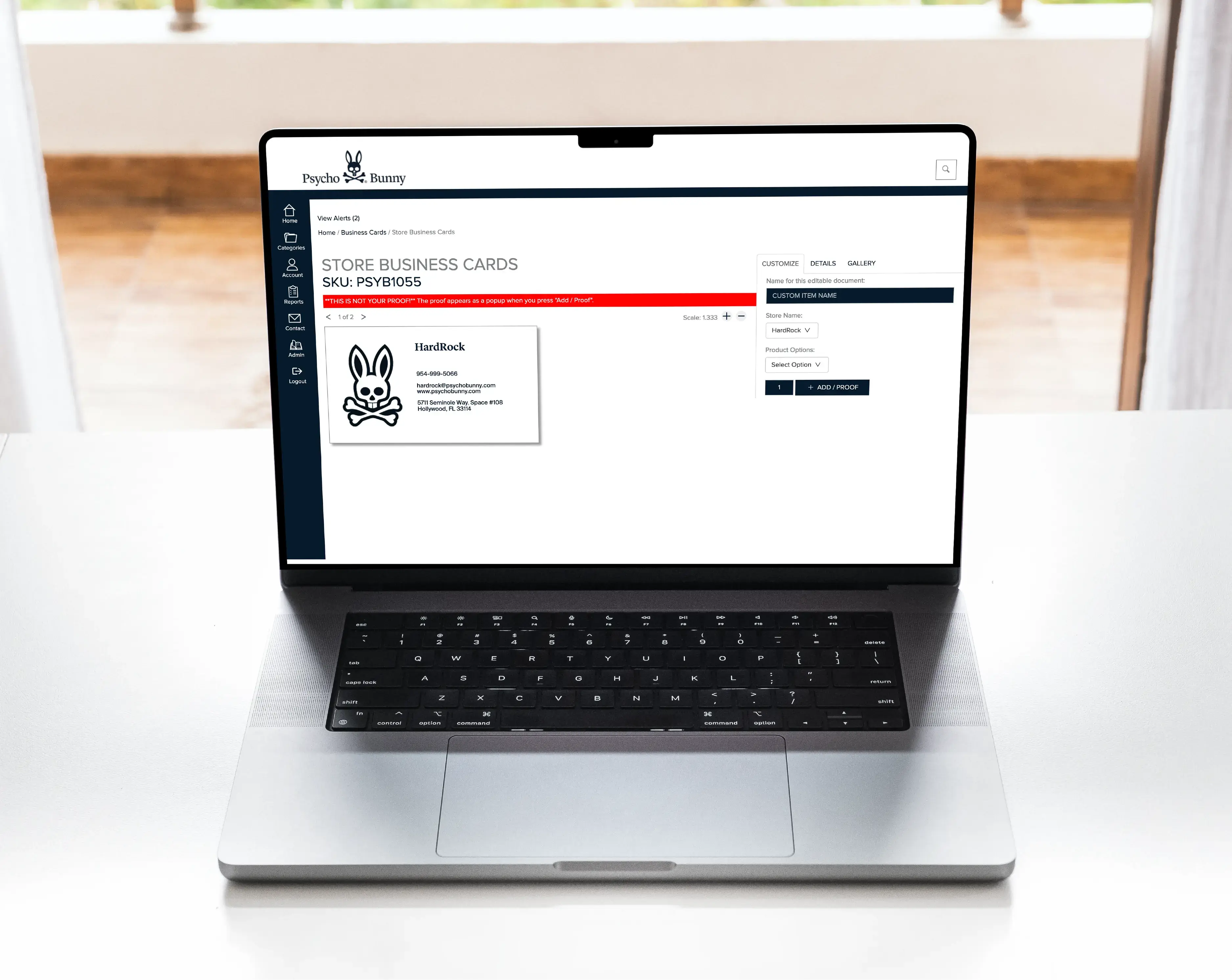
Editable templates and custom approval workflows give stores appropriate flexibility while protecting the brand. Behind the scenes, Phase 3 supports the program with print-on-demand, kitting, assembly, and fulfillment.
In other words, the storefront is only the visible part of a much larger operation.
Decide What to Stock and What to Print on Demand
Now the approved Mother’s Day materials are ready. But not all of them should be produced the same way.
Perhaps every store needs the same core window graphic, making a larger production run economical. A location-specific sign with store information might be better produced on demand. Evergreen store materials used with the campaign may already be stocked in inventory.
At this stage, the focus shifts from
"What should we print?"
to
"What is the most efficient way to support this campaign?"
The decision comes down to more than quantity. Marketing teams also need to consider how frequently an asset changes, how much customization it requires, how predictable demand is, and how costly it would be to store or eventually discard unused materials.
The right mix avoids two expensive outcomes: running out of materials that locations need and filling a warehouse with materials that become obsolete before they're used.
A comprehensive and integrated print program supports both approaches. This allows companies to use stocked inventory and print-on-demand where each makes the most operational and financial sense.
Know What You Have
The campaign is two weeks away. Fifty stores have ordered. Twenty-five haven't. A few of the most popular pieces are being ordered faster than expected.
At this point, inventory visibility becomes critical. The marketing team must know what is available, what locations have ordered, and what needs replenishing. Without this insight, marketing might print too much of an unnecessary item or run out of popular items.
Centralized inventory data helps teams identify low-stock items earlier, set appropriate replenishment points, and see which materials aren't moving at all.
Over time, usage patterns also make inventory planning more accurate. Instead of asking,
“How many do we think we'll need?”
your teams can ask,
“What does our actual demand tell us?”
Get Materials Where They Need to Go
Producing a marketing piece isn't the end of its lifecycle. The materials still have to reach 75 stores. Store 14 needs two window graphics, four posters, and six counter signs. Store 38 has a larger window and needs a different graphic. Store 52 ordered an additional display piece.
Each order may combine inventory materials with on-demand pieces. This stage includes organizing orders by location, packing them correctly, and shipping them with enough time to arrive before the sale.
The online storefront captures those initial 75 orders but it’s the operation behind it that turns them into 75 campaign-ready shipments, reaching the right people exactly when they need them.
Case in Point: ABM
ABM needed a more efficient way for employees across its U.S. locations to order materials on demand. Phase 3 now supports multiple MediaLink sites covering signage, graphics, marketing collateral, business cards, promotional products, and other materials.
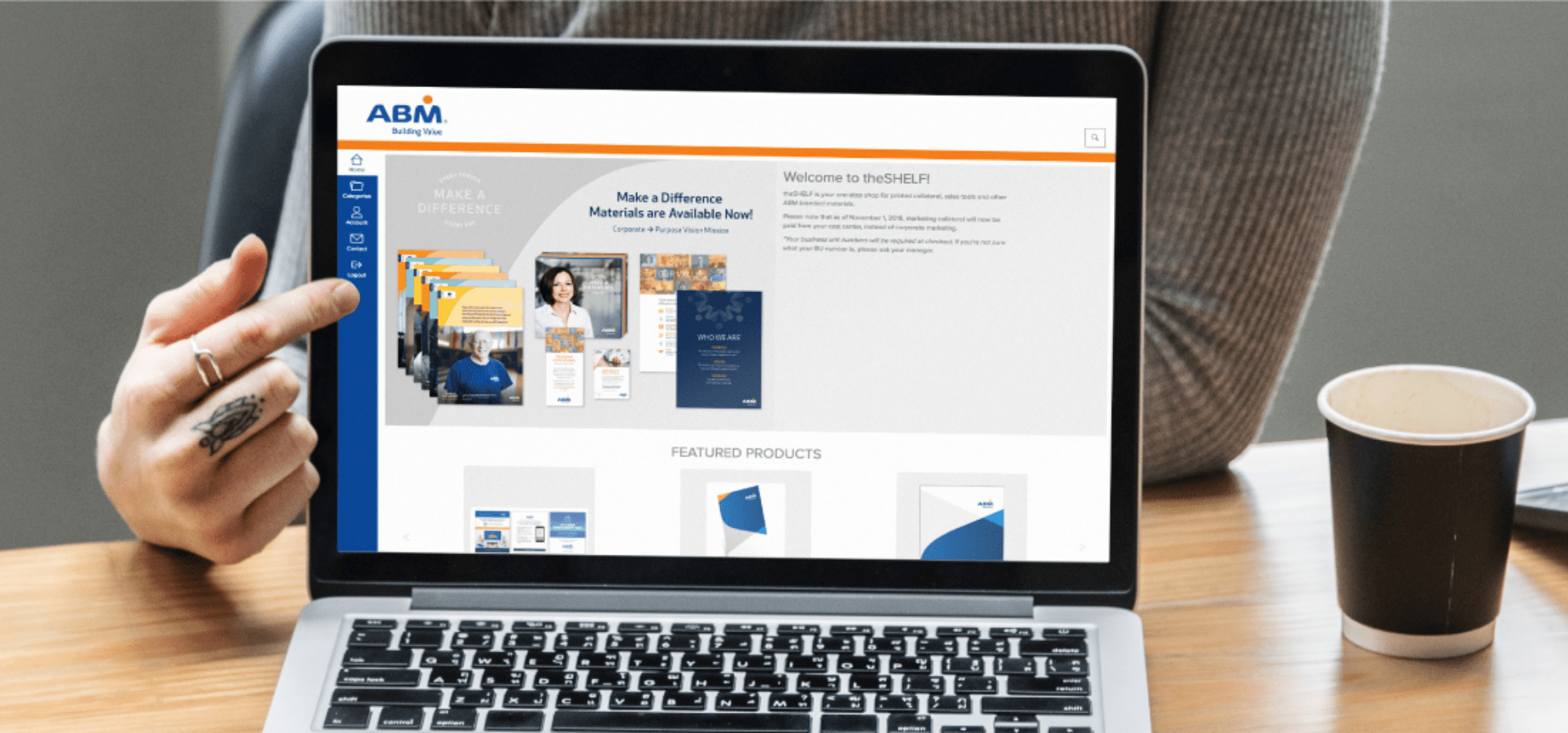
The scale demonstrates what happens behind a seemingly simple online order. ABM's program includes 1,600 SKUs and 5,000 users, supported by print-on-demand, warehousing, and fulfillment.
Making thousands of products available online addresses the access and ordering challenge. Warehousing and fulfillment ensure those products get where they need to go.
Respond When Needs Change
The Mother’s Day campaign launches. Store 27 damages a window graphic during installation. Store 41 needs more promotional coupons. Another location realizes it never ordered the POS signs.
A connected operation manages all exceptions. Marketing will never need to revert to email chains, spreadsheets, and emergency vendor calls.
With visibility into inventory, print-on-demand capacity, and fulfillment, replacement or replenishment orders can move through the same controlled process as the original order.
A well-managed print lifecycle accounts for the exceptions as well as the plan.
Close the Loop
Mother’s Day ends, but the lifecycle doesn't.
The marketing team needs to remove the creative from the portal, count remaining inventory, and analyze ordering and usage data.
This is where connecting the print lifecycle creates value beyond efficiency.
A transaction report can tell you which stores ordered a window graphic. A connected operation can tell you much more, including:
-
Which versions of materials are locations ordering?
-
When are locations placing orders?
-
Which locations ordered replacement pieces?
-
What should we replenish, move to print-on-demand, or eliminate?
-
Where could we reduce unnecessary spending?
This approach shifts marketing’s focus from processing individual print transactions to actively managing the entire print program.
The lifecycle then begins again with improved information. For the next seasonal promotion, marketing relies on actual data regarding demand, inventory, replenishment, and previous campaign usage.
Technology Connects the Process. Expertise Guides the Decisions
Connecting the lifecycle doesn't mean automating every decision. A platform can show that inventory is declining. Someone still needs to determine whether to replenish it, change the quantity, or move the piece to print-on-demand. Data can show that one location repeatedly needs replacement signage. Someone needs to understand why. A system can route an urgent order, but an experienced production and fulfillment team still has to solve the problem when a shipment needs to arrive tomorrow.
The strongest print programs combine technology with operational expertise.
That means the partner behind the platform needs to understand more than software. Production methods affect inventory. Inventory decisions affect warehousing. Brand governance affects what gets produced. Fulfillment requirements can influence how marketing kits and ships items.
The value stems from understanding how a decision in one part of the lifecycle affects cost, speed, inventory, and execution across the entire print program.
Phase 3 is the one partner that combines operational expertise with MediaLink technology, print production, warehousing, fulfillment, branded merchandise, fabrication, and agency capabilities.
Look Beyond the Storefront
Think back to our 75-store Mother’s Day campaign. To the store manager, the process was simple: log in, choose the right materials, and submit the order.
That's exactly how it should feel. That simplicity, however, depends on a much larger operation behind the scenes - one that protects the brand, makes smart production decisions, manages inventory, coordinates fulfillment, responds when needs change, and learns from every campaign.
That's why the better question for marketing and operations leaders isn't simply:
“Do we have Web-to-Print”
It's:
“Can we manage the entire lifecycle of our branded materials?”
Web-to-Print is an important part of that story. It just isn't the whole story.
Make Your Print Program Work as One System
Phase 3 combines MediaLink technology with brand governance, print production, inventory management, warehousing, fulfillment, and distribution to help companies manage branded materials across the entire lifecycle.
Instead of coordinating separate vendors, systems, and workflows, you can manage more of your print program through one experienced partner.
Contact Phase 3 to explore how a connected approach to print operations can give your teams greater control, visibility, and efficiency.